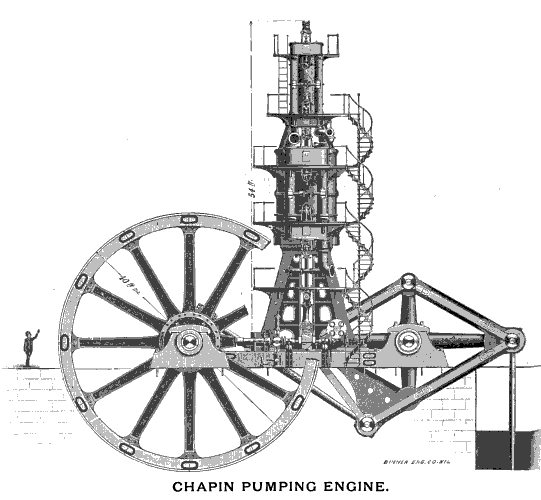
The steam engine was not an overnight success.
One of the first real commercial successes was mine pumping - a device to pump away water from mines that constantly flooded. Indispensable to the mining industry around 1712, but without broad societal transformation for another half a century. Here’s a rough overview of the timeline:
| Sector | Timeframe | Why it worked |
|---|---|---|
| Mine pumping | ~1712 | Cheap fuel + urgent need |
| Improved pumping | 1760s | Massive fuel savings |
| Textile mills | 1770s–1800s | Factory-scale rotary power |
| Ironworks | late 1700s | Heavy, continuous workloads |
| Transportation | 1800s | Required mature tech |
The steam engine had to endure much criticism before its unquestionable success and importance as the general-purpose power source behind the industrial revolution.
“This is just a pump! A crude, inefficient, single purpose device. Certainly inferior to the water wheel for most use cases!”
— Society, early–mid 1700s
“It will take all our jobs! Wages will collapse! Power and wealth will be centralized!”
— Society, late 1700s
“These things are dangerous! Boilers can explode and systems fail catastrophically! We should regulate these things!”
— Society and politicians, late 1700s
The world passed through three phases of dismissal, anxiety, and eventually normalization.
The steam engine was initially underestimated because it looked crude, feared because it shifted power, and only recognized as transformative after it had already reshaped labor, cities, and capital.
AI sits at a similar moment in history.
The Modern Steam Engine
AI is not just about reducing manual labor in software engineering, in doing research, or in crafting social media content. These are all just early applications. Low-hanging fruit, at best. Dismissing AI at this point is like dismissing the steam engine because you do not need a mine pump. It’s all about potential.
Steam engines were used to build better steam engines - faster, cheaper, and more powerful. It enabled countless secondary applications as the technology matured.
AI is already being used to accelerate AI research and iteration. AI is already empowering work in many fields, and will continue to spread to many others.
It is way too early to make reasonable predictions about the full scale of impact for current AI advancements. The only thing we can already tell is that the impact will be transformative.
This is what makes me incredibly excited about AI as a technology. It may never take over all aspects of what we used to know as software engineering. But it is extremely valuable for some use cases. And the most significant impact will likely turn out to be somewhere else entirely! The primary thing we can do at this point is to stretch our imagination and take a broader view of the opportunities the underlying technology enables - and what enabling technologies we need to unlock them.
Where Will It End?
It’s very hard to predict limits for transformative technology. Computation is one domain that has consistently been able to deliver superlinear improvements for decades on end. And with current investments in robotics, even physical barriers appear to be breaking down. While naturally AI will hit permanent constraints at some point, the first (quasi-)permanent limit AI hits may very well turn out to be what we as a society will tolerate. And even so, this will simply shape the opportunity landscape in favour of other opportunities.
Transformative technologies usually do not go away until they are superseded. And usually, it’s impossible to have a clear picture at the beginning of where the technology will take us.
Personally, I believe we are only scratching the surface.